

When Should a Commercial Roof Be Restored?
A quality roof restoration is a great way to extend the life of a commercial roof and make it “good as new”, but when is it time to call a contractor?
There are multiple factors to consider including age, material, quality of installation, severity/location of damage, frequency of maintenance, and environmental factors. If it has been more than 10-15 years since a roof was installed, it would be worthwhile to call an expert to review the current health of your roof.
| Expected Life Of Commercial Roofing Systems | |
|---|---|
| Material | Expected Lifespan |
| Metal | 30 - 45 Years |
| TPO | 22 - 30 Years |
| PVC | 20 - 30 Years |
| EPDM | 22 - 35 Years |
| SPF (Spray Polyurethane Foam) | 20 - 55+ Years |
Just like most things in life, leaving minor issues unaddressed will result in more significant problems down the road and addressing the root cause(s) as soon as possible is always the best course of action. In addition to this, if there is existing damage and the area needing repair is not specific/localized, then it may be time to consult with an expert to determine if a roof restoration is right for you.
What A Roof Restoration Can Fix?
The “Structural Age” Of A Roof
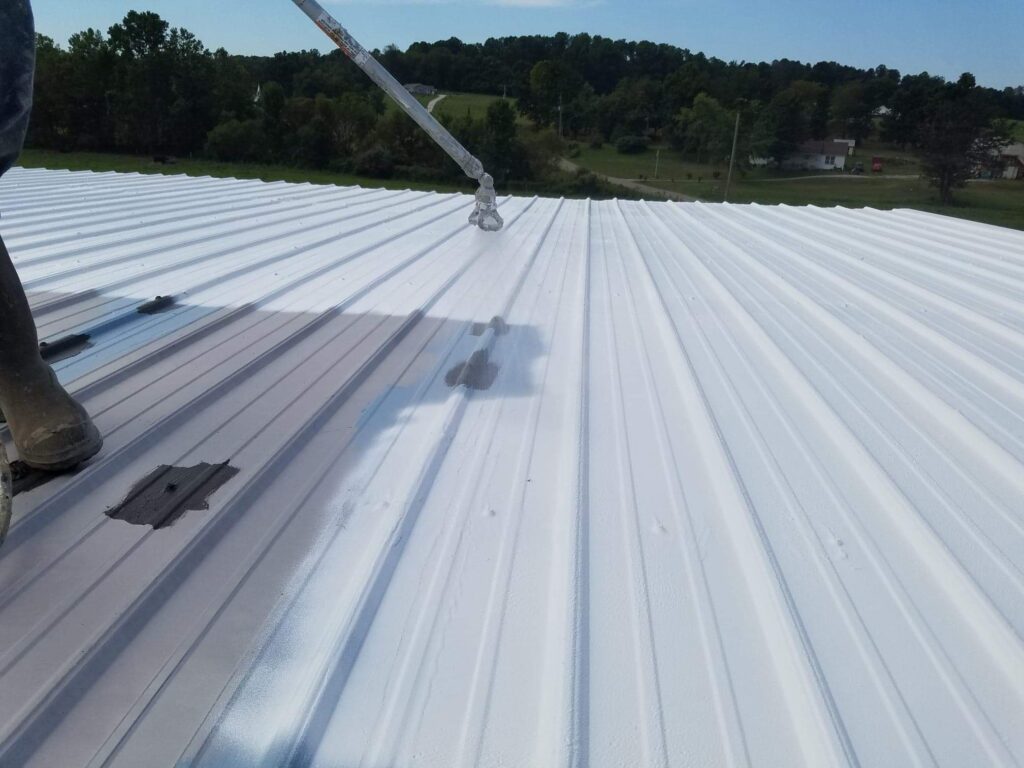
Generally speaking, a roof restoration is a great proactive measure to extend the life of your commercial roof. Once a roof is appropriately restored, all defects will be resolved along with an opportunity to reapply or upgrade the roof’s membrane coating.
Compared to a roof replacement, a roof restoration is considered a “green” solution and a cost-effective way to give your building a “makeover”. The goal for a restoration job is to re-use as much “healthy” existing material as possible and to only replace when necessary.
Low Spots / Pooled Water
If you have noticed pooled water on your roof and it’s not caused by a clogged drain, then this indicates your commercial roof has low spots. This is commonly caused by material warpage or compressed insulation and if left unresolved, then a roof replacement may be necessary (leaks, mold, etc.).
Blistering / Bubbling
Blisters are formed by pockets of air or moisture trapped between layers of membrane or the membrane and the roof deck. This can worsen over time due to pressure built up between the material, leading to cracks and potential leaks.
Single-ply roofs that are exposed to hot summers and below-freezing winters are prone to this phenomenon.

Storm Damage
Storms are a frequent cause of roof damage. Debris can cause drainage issues leading to standing water which can cause damage over time. Hail can cause cracks and other leaks, especially for aged membrane roofs. High winds can cause wrinkling/bubbling, impacting the integrity of the roof.
That being said, a great proactive measure is to Contact Us to evaluate any potential damage caused after any recent major storm.